
SKIN AND APPENDAGES (ANATOMICAL MICROSCOPY)
13.9
Lip
Specimen:
SPECIMEN DETAILS:
Organ: Lip
Origin: Human
Staining: Hematoxylin Eosin (HE)
METHOD AND SPECIMEN DESCRIPTION:
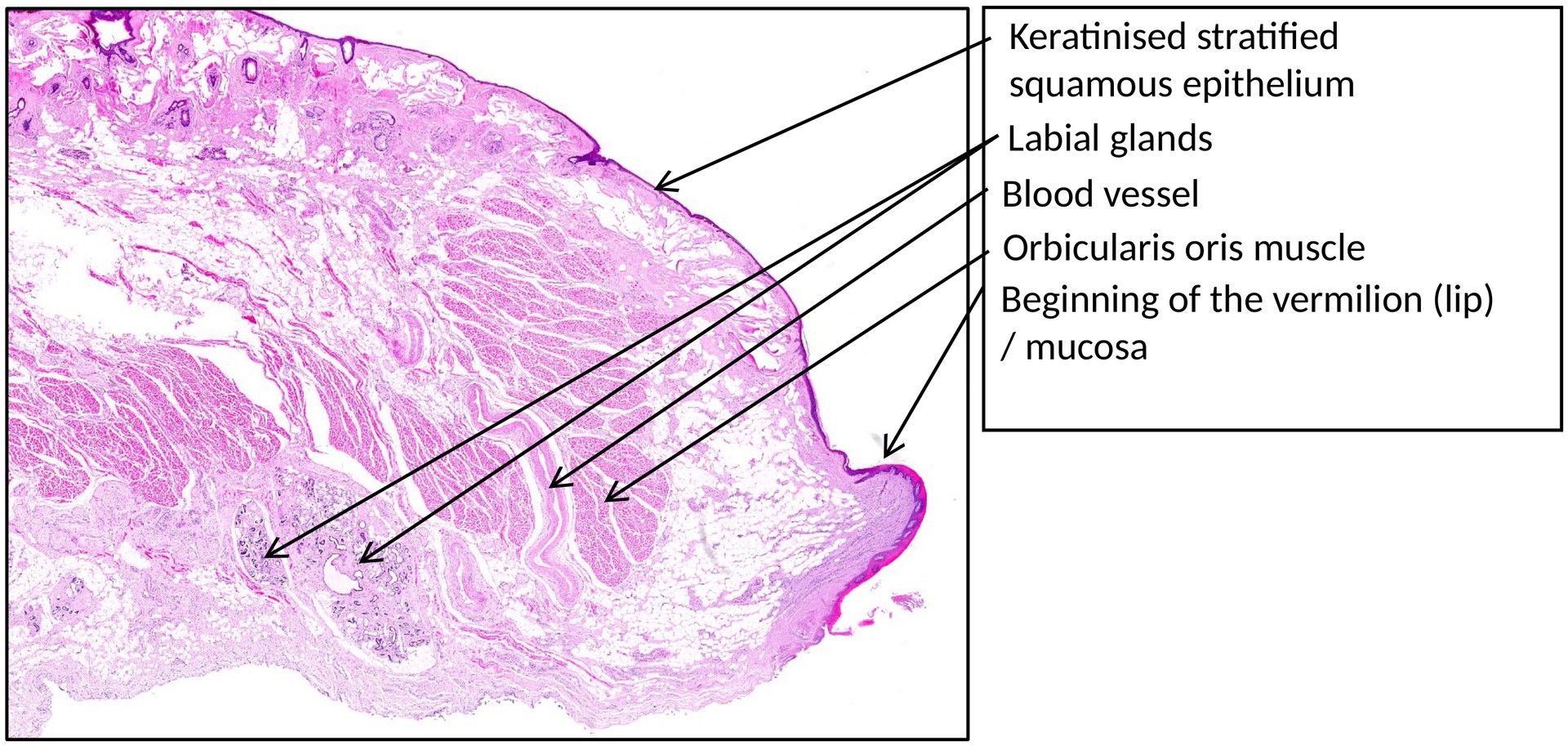
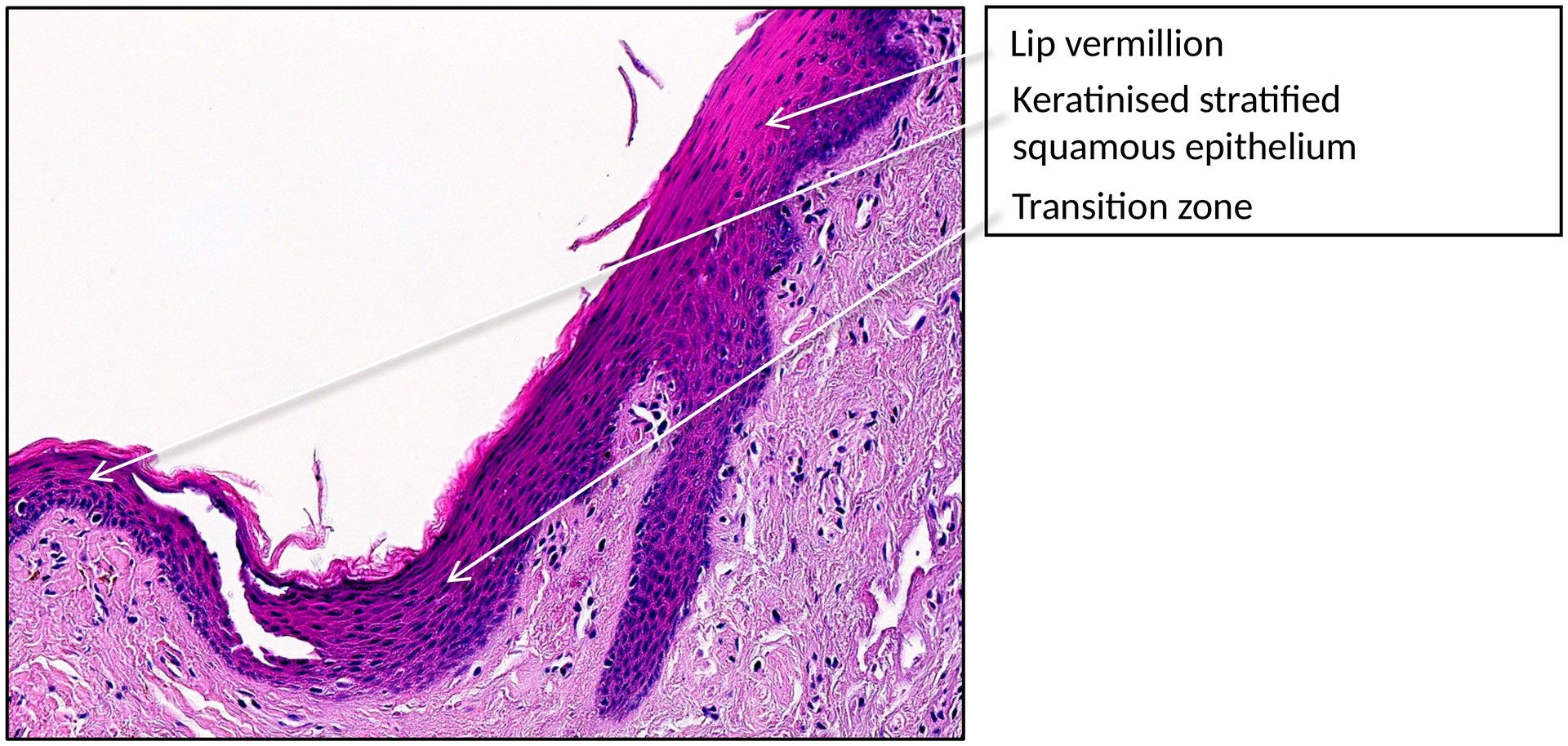
Normal sagittal section of the human lip.
OBJECTIVE OF THE EXAMINATION:
To study the transition between stratified keratinized squamous epithelium and stratified non-keratinized mucosal epithelium.
SPECIAL FEATURES OF THE SPECIMEN:
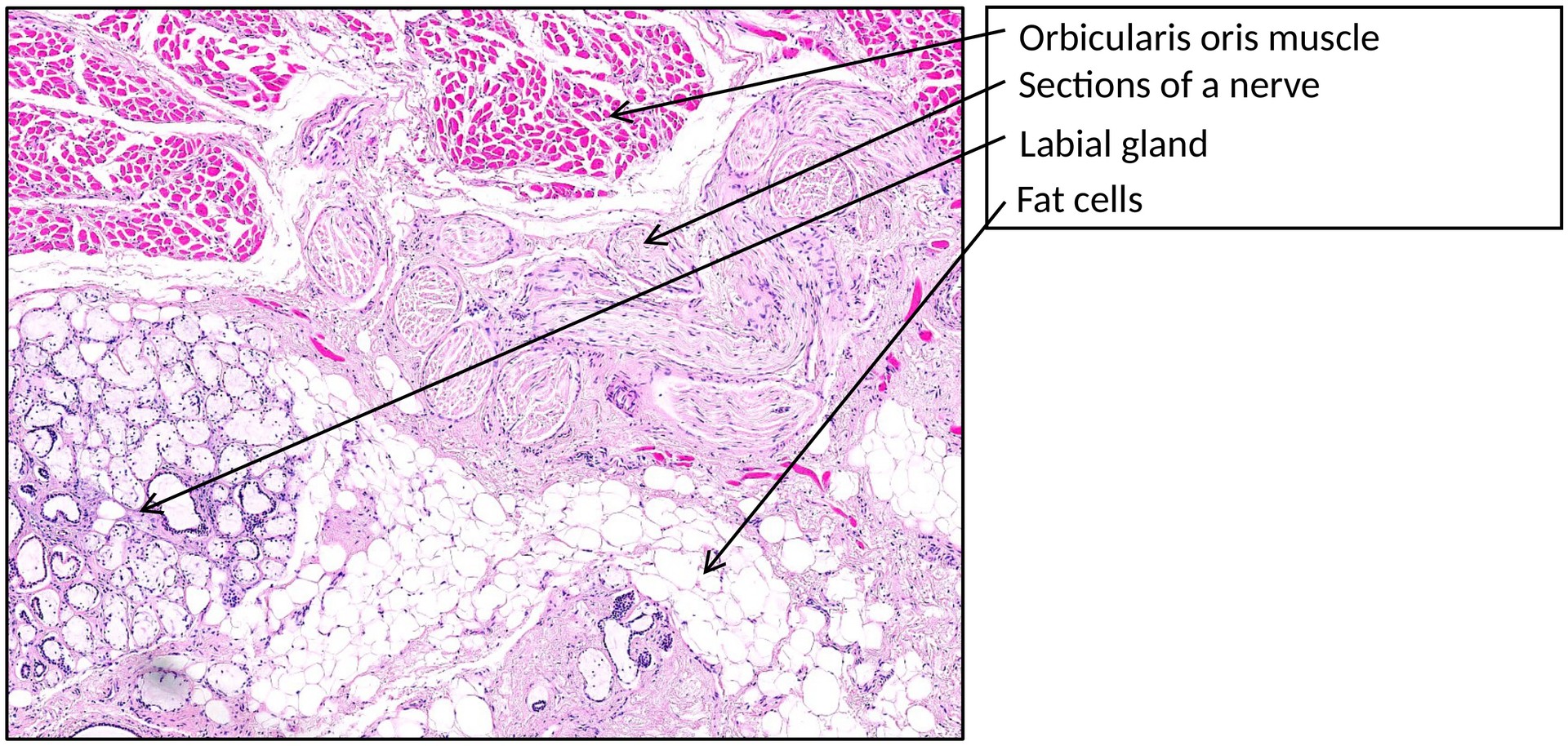
The lip consists of a fold of soft tissue with a muscular core, formed by the orbicularis oris muscle (pars labialis and pars marginalis).
In this specimen, three distinct regions can be recognized:
- Pars cutanea (outer skin region)
- Pars intermedia / lip vermilion (transition zone)
- Pars mucosa (inner mucosal region) — detached in this preparation
Pars cutanea:
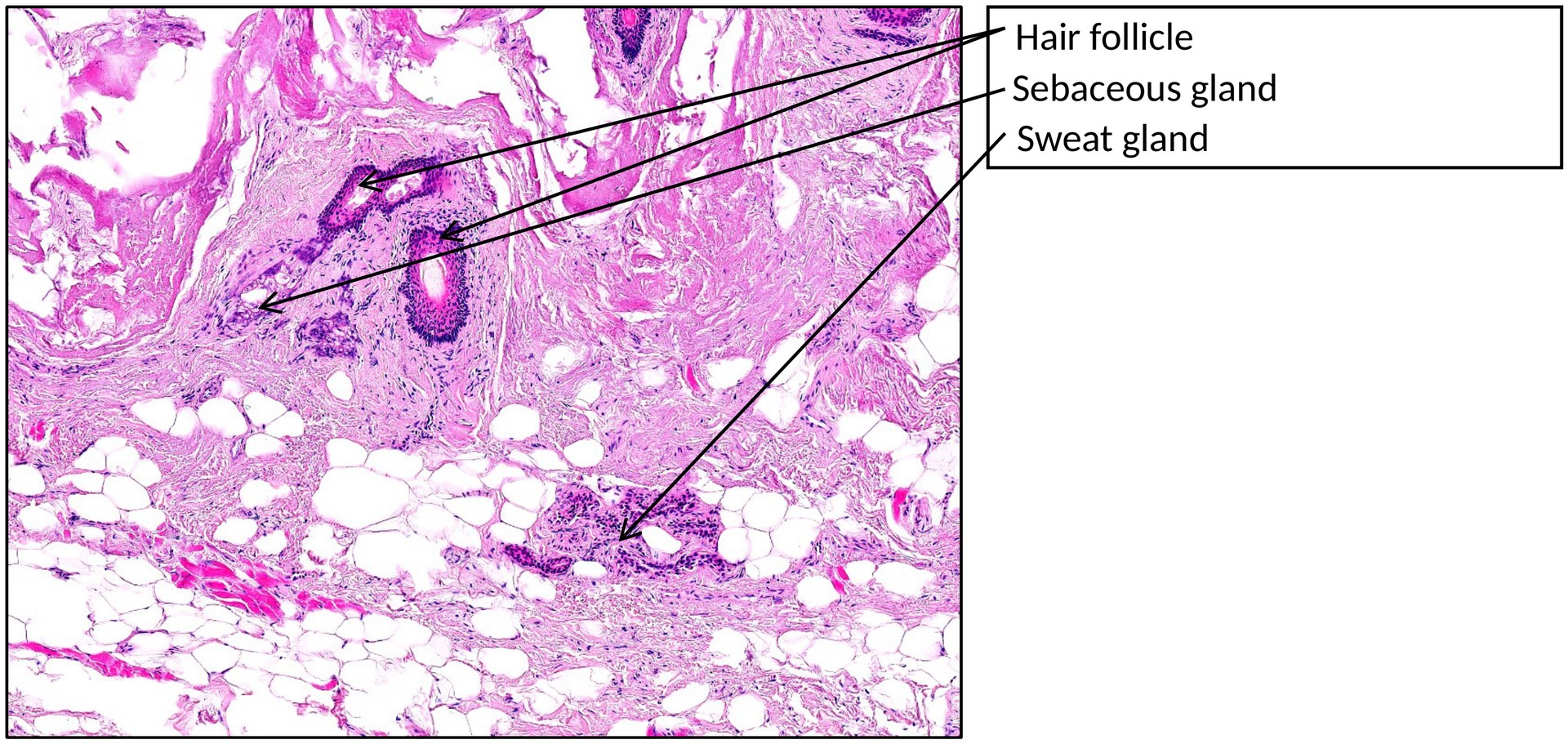
- Lined by stratified keratinized squamous epithelium.
- Contains hair follicles, sebaceous glands, and eccrine sweat glands in the dermis.
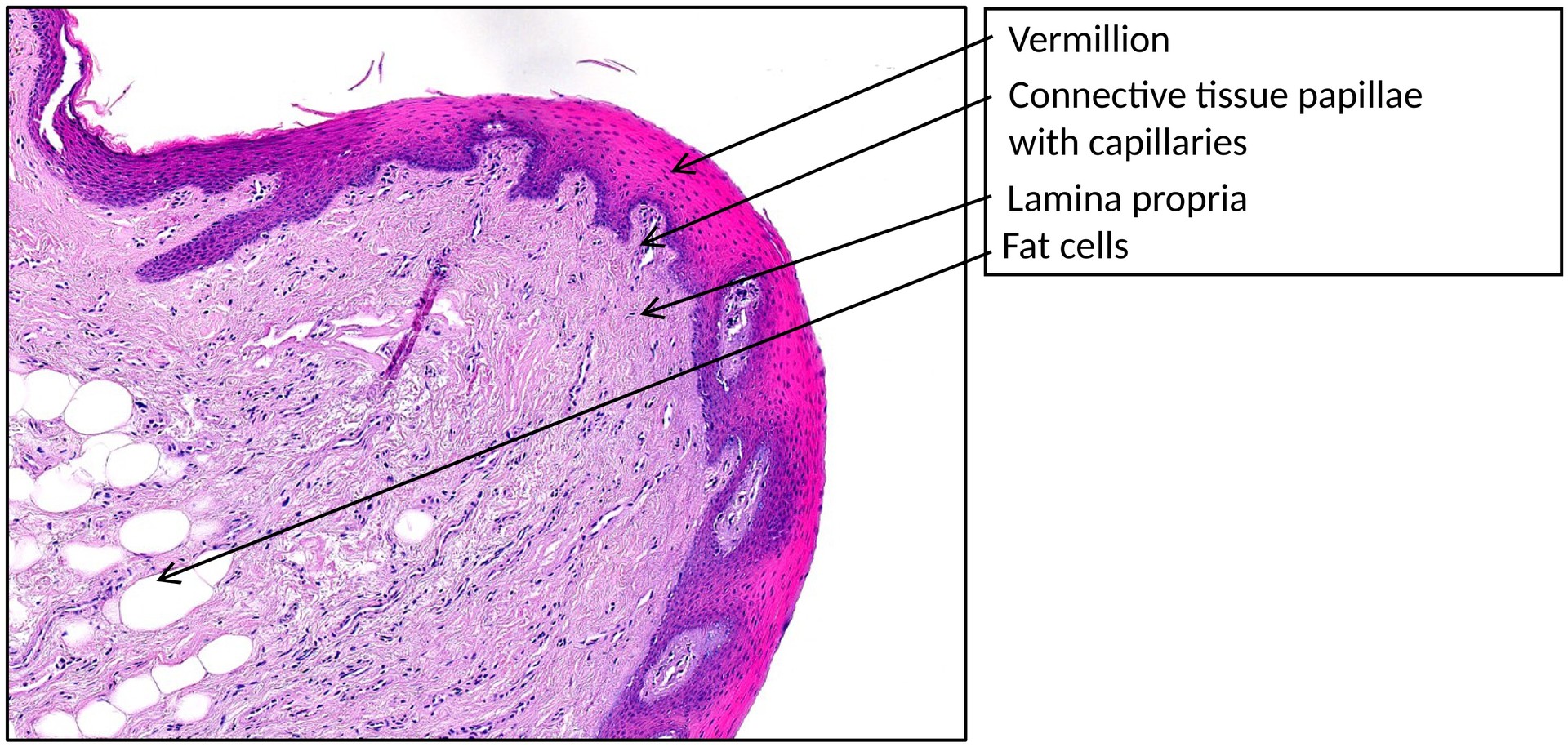
Lip vermilion (pars intermedia):
- Displays numerous connective tissue papillae extending close to the epithelial surface, each containing capillary loops.
- Covered by a thin orthokeratinized epithelium with a very thin stratum corneum.
- Lacks pigmentation and contains no glands (except for occasional free sebaceous glands).
- The red color of the lips results from blood within the capillary loops shining through the thin epithelium.
Pars mucosa (not preserved in this specimen):
- Normally lined by stratified non-keratinized squamous epithelium.
- Contains numerous mucous labial glands within the connective tissue.
TASKS:
- Identify the following structures in the specimen:
- Orbicularis oris muscle
- Labial glands
- Blood vessels
- Hair follicles
- Sebaceous glands
- Eccrine sweat glands
- Nerves
- Locate the transition zone between the lip vermilion and normal facial skin.
- Observe the connective tissue papillae and capillaries that extend close to the epithelium.
License
University of Basel